The nearest hospital is two hours away by foot. That simple fact once defined the boundaries of health care for thousands of families living in the hills of Musanze District, northern Rwanda. For decades, mothers gave birth at home, attended by neighbours and tradition. For some, that tradition saved lives. For others, it did not.
Uwimana Jeanne was nineteen years old when she delivered her first child. She remembers lying on a woven mat, her mother-in-law beside her, the darkness outside the window absolute. "I was not afraid," she says, stirring a pot of beans over a small fire. "I did not know enough to be afraid." Her son survived. So did she. But she had been lucky, and somewhere deep in the hills, she knew it.
A Quiet Revolution
Over the past decade, something has shifted in these hills. A network of community health workers — mostly women, mostly mothers themselves — has expanded into nearly every village. They carry smartphones loaded with data-collection tools, and they carry something rarer: trust. Neighbours know them by name. Pregnant women walk to their homes freely, without the shame or distance that might stop them visiting a clinic.
"When a woman knows who to call and feels safe calling, everything changes. That is the whole work."
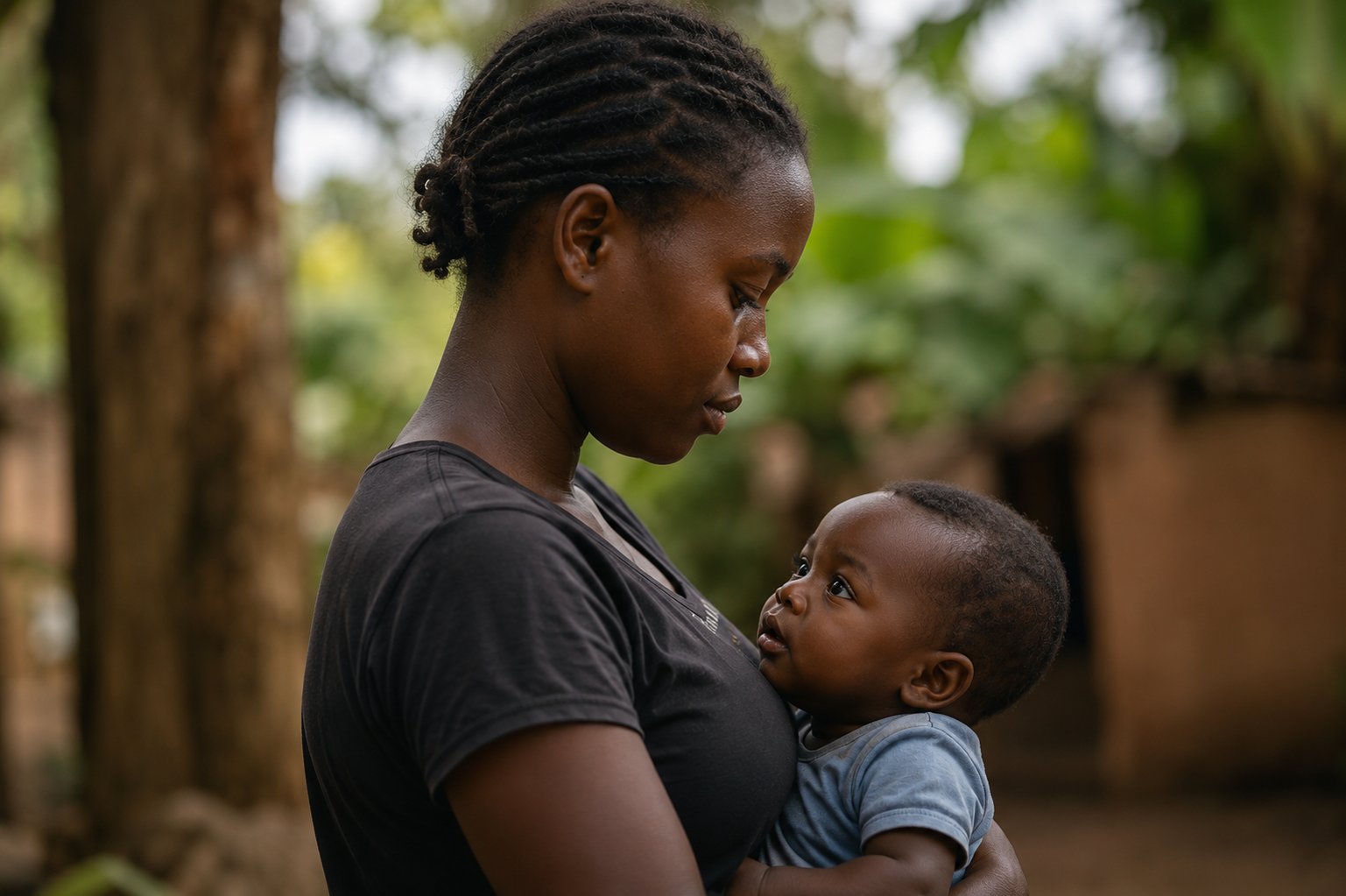
Mukamana Diane has been a community health worker for seven years. She covers four villages and keeps a handwritten register of every pregnant woman in her zone. During a routine visit, she noticed that one of her clients — a young woman named Aline — had elevated blood pressure and swollen feet. She arranged transport to the district hospital within the hour. Aline was diagnosed with severe pre-eclampsia. A week later, her daughter was born healthy. Aline named her Diane.
Data That Saves Lives
What makes this network different is not just the people — it's the infrastructure behind them. An NGO-backed program has equipped health workers with a simple digital tool that tracks pregnancy timelines, flags risk indicators, and alerts supervisors when action is needed. The technology is deliberately unflashy: it runs on low-cost Android phones, works offline, and syncs when connectivity is available.
In Musanze District, maternal mortality has fallen by 43% over the past five years. Child mortality for under-fives has dropped by over a third. Program coordinators are careful not to attribute all of this to the health worker network alone — improved roads, increased household income, and national health policy have all played a role. But the data is striking, and the stories behind the data are more striking still.
Uwimana Jeanne is pregnant again, with her third child. She checks in with her community health worker weekly. When she goes into labour, she will not do so alone in the dark, hoping to be lucky. She will have a plan, a phone number, and a network of people who already know her name.
This story was produced in partnership with a health NGO operating in northern Rwanda. Names have been used with full permission of the individuals featured.